Floyd's character comedy drew on vaudeville, local personalities, television conventions, and an endless supply of costumes and voices. The personas below became recurring parts of the show's unpredictable world.
Part of Floyd's genius lay in his ability to combine the silliest of Vaudeville slapstick with biting media satire. Here are some of his most-loved recurring characters and personas that defined the show's 24-year run.
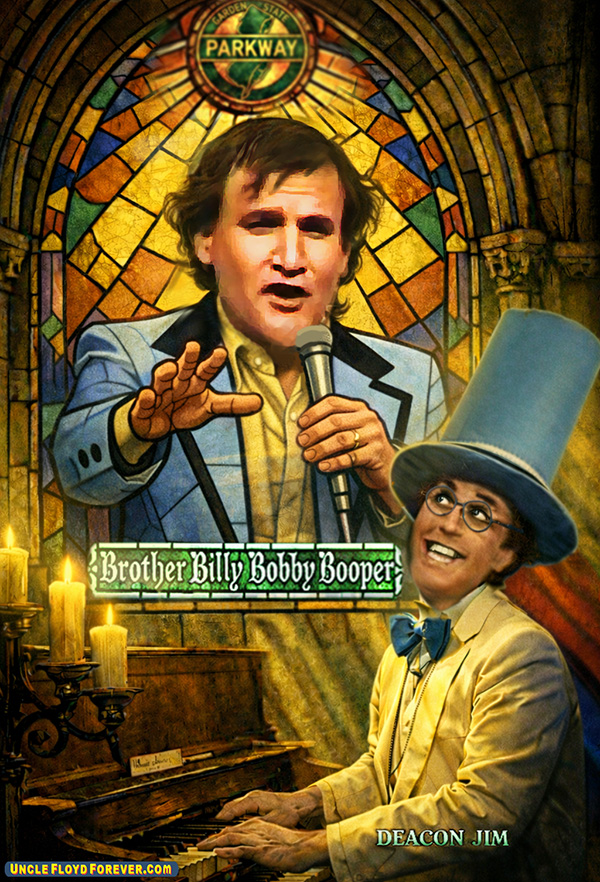
Brother Billy Bobby Booper
Parody of high-octane TV evangelists; often accompanied by Deacon Jim.
Watch Video
Colonel Corn
Visitor from the South; often discusses his cousin Lazy Eddie.
Watch Video
Cowboy Charlie
Host of the "Circle F" ranch; parody of early children's TV hosts.
Watch Video
Don Goomba
The definitive "Wise Guy" persona; operatic, Godfather-style sketches.
Watch Video
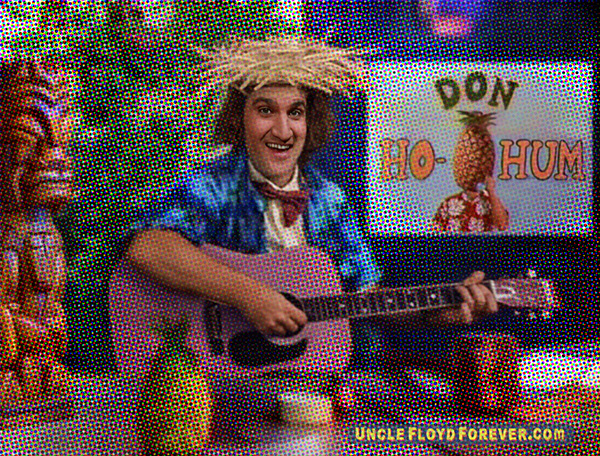
Don Ho Hum
Sleepy, Hawaiian-shirted ukulele player parodying easy-listening tropes.
Watch Video
Eddie Slobbo
Uncouth, beer-drinking, cigar-chomping everyman.
Watch Video
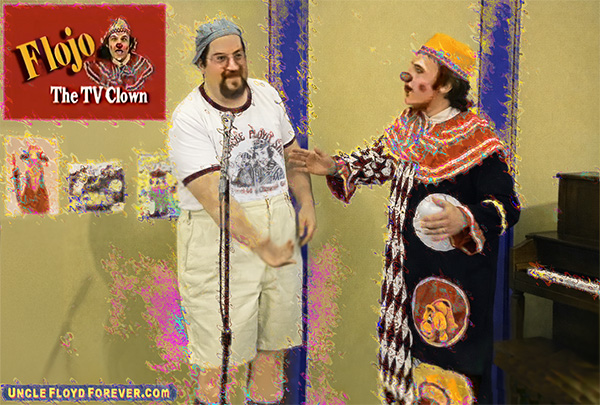
Flojo the TV Clown
Boisterous kiddie entertainer harassed by child-like imbeciles.
Groucho
Classic Groucho Marx character impression.
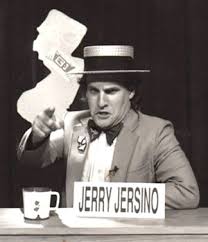
Jerry Jersino
Absurdly proud resident crank from the Garden State.
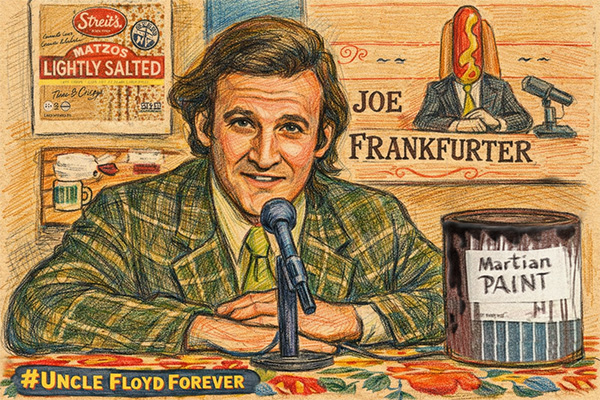
Joe Frankfurter
"Nostalgically Yours" Joe Franklin parody; featured Tiny Thomas and his Yukalele. Endless sponsors.
Watch Video
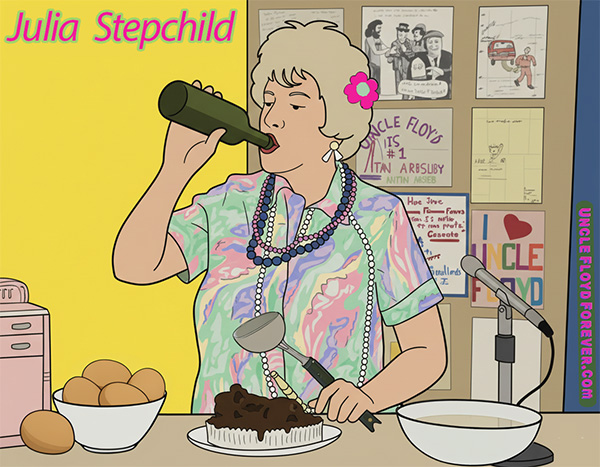
Julia Stepchild
Chaotic, high-pitched parody of Julia Child -- involving culinary disasters.
Watch Video
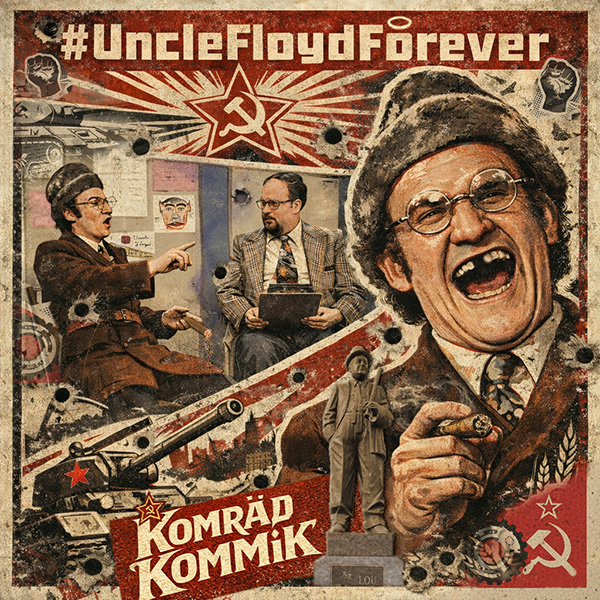
Komrad Kommik
Soviet-era comedian; ushanka hat, deadpan propaganda jokes.
Watch Video
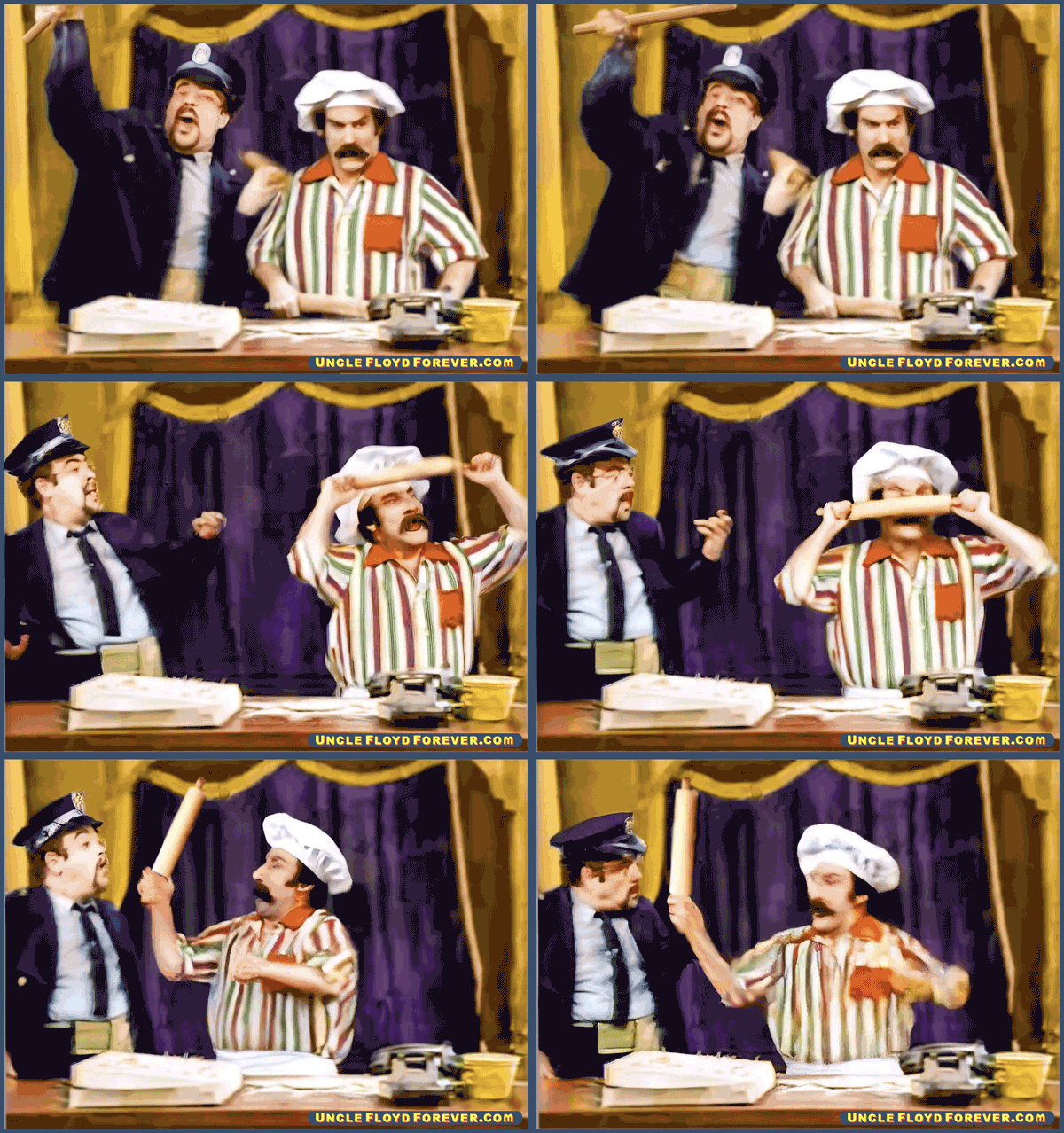
Pasquale
Proprietor of "Pasquale’s Pizzeria", argues with the diminutive Mrs. Giambalgnone.
Watch Video
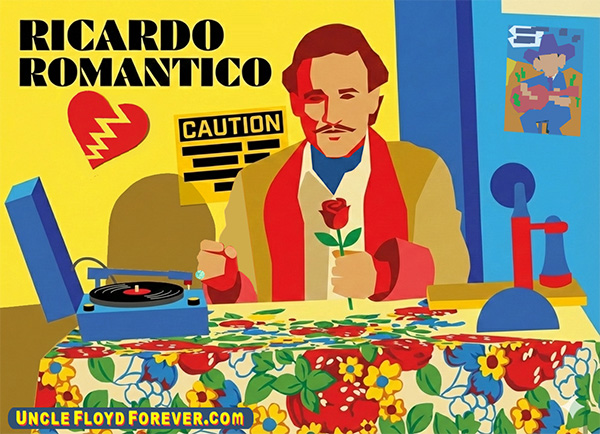
Ricardo Romantico
The quintessential "Latin Lover" lounge singer; tuxedo and cheap cologne.
Watch Video
×
![]()
The show's wider improvisational style, fan participation, music, and notable guests continue on the surrounding pages. This page focuses on Floyd's recurring characters and comedy segments, followed by the studios and production transitions that carried the show through its long broadcast history.
After national syndication ended, the show continued reinventing itself through New Jersey Network, CTN, several production studios, alternative program formats, and a later Cablevision revival. The complete broadcast and production journey is summarized in the timeline below.
BROADCAST & PRODUCTION TIMELINE
January 29, 1974
Uncle Floyd & His Friends debuts on UA-Columbia Cablevision's local cable channel in New Jersey
November 1974 (through 1980)
The Uncle Floyd Show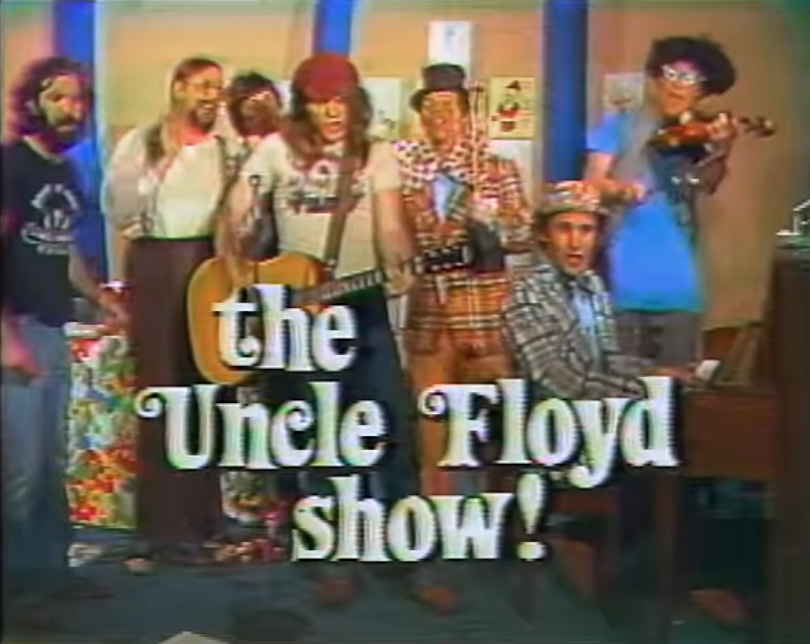
moves production to WBTB-TV Channel 68 at 416 Eagle Rock Avenue in
West Orange, the "Spooky House" location. Scott Gordon joins the show there in 1976.
1980
Channel undergoes call sign changes to WTVG and WWHT.
1980-1983
Production moves to 980 West Market Street in Newark, a former Wiss scissors office building. This is the show's syndication-era home; its dressing-room showers are especially useful after pie fights.
Before 1983
Between Channel 68 and New Jersey Network, the company works briefly from a studio in Avenel, New Jersey.
1983-1986
Production takes place at New Jersey Network's 980 Broad Street studio in Newark, with Jeff Freeman's reconstruction of the earlier syndicated-show set. Broadcasting on NJN, the statewide PBS network, continues to broaden the show's audience.
1986-1992
The show airs through the Cable Television Network of New Jersey (CTN). Some programs use music-centered formats showcasing local bands, while Uncle Floyd's New Jersey visits towns and businesses around the state.
After 1986
Working with producer, director, and editor Patrick Mirucki, the show's production moves to OBC-TV—the Orechio Broadcasting Company studio at 800 Bloomfield Avenue in Nutley, owned by Nutley Sun publisher Frank A. Orechio.
1980s
For a period, the show operates from a Woodbridge warehouse belonging to Jim Monaco's aunt. The building has some challenges, including no heat or air conditioning; however, the show's indomitable spirit is still running strong.
Late 1980s
Production then moves to a smaller studio in Hightstown, near Great Adventure, before eventually returning to OBC-TV in Nutley.
1989
Patrick Mirucki produces a revised format titled The Floyd Show, using a one-on-one interview format in place of the traditional ensemble show. One particular surviving half-hour program features Floyd interviewing music journalist Mike Greenblatt about his heavy-metal magazines.
1990 (through 2001)
As traditional studio production grows increasingly expensive, the program experiments with reduced-cost formats: Floyd interviews bands and performers, and later takes the show on the road to visit towns, businesses, and local residents.
1990s
Several live programs are broadcast from Rascals Comedy Club in Ocean Township, New Jersey. And, while first-run production ends, CTN continues to air repeats until that channel's demise.
1998
Cablevision produces a 100-episode revival at its Oakland, New Jersey studio, with guests including Marky Ramone and members of the Misfits. Despite enthusiastic viewer response, Cablevision management cancels the show after this run.
2018
Four special Uncle Floyd's New Jersey programs are produced as a separate late revival. NOTE: Up through this period and beyond, Floyd continued to perform live in various venues across multiple states—as well as paying tribute to his heritage as host of the popular radio program Italian-American Serenade.
24-YEAR JOURNEY
Through all these transitions, the show maintained its core identity and loyal viewership, demonstrating remarkable adaptability in a rapidly changing television landscape.